A reliable business network starts with more than just quality internet service and modern hardware. The way your network cables are organized behind the scenes plays a major role in keeping your systems running smoothly. One of the most important components of a structured network is the patch panel.
While it may look like a simple piece of networking equipment, a professionally installed patch panel creates an organized, efficient, and scalable network that is much easier to maintain over time. Whether you’re running a small office or a large commercial facility, investing in proper patch panel installation can save time, reduce downtime, and simplify future upgrades.
In this guide, we’ll explain what a patch panel is, why professional installation matters, and how it makes network maintenance significantly easier.
What Is a Patch Panel?
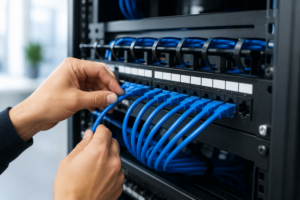
A patch panel is a central hub where all your Ethernet or fiber optic cables terminate before connecting to network switches, routers, or other networking equipment. Instead of connecting every cable directly to a switch, the patch panel provides a clean and organized way to manage your network connections.
Each cable is carefully labeled and terminated, making it simple to identify, test, repair, or reroute connections whenever needed.
Patch panels are commonly installed in:
- Office buildings
- Retail stores
- Schools
- Hospitals
- Warehouses
- Manufacturing facilities
- Data centers
Why Proper Installation Matters
Installing a patch panel isn’t just about plugging in cables. Every network cable must be measured, routed, labeled, terminated, and tested correctly.
Professional installation ensures:
- Correct cable termination
- Compliance with industry wiring standards
- Clean cable management
- Reduced signal interference
- Reliable long-term performance
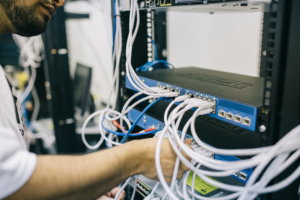
Poorly installed patch panels often lead to loose connections, mislabeled cables, tangled wiring, and frequent troubleshooting.
1. Faster Network Troubleshooting
One of the biggest advantages of a professionally installed patch panel is faster troubleshooting.
When every cable is labeled and organized, IT technicians can quickly identify which cable belongs to a workstation, conference room, security camera, or wireless access point.
Instead of spending hours tracing cables through a messy network rack, technicians can locate the issue within minutes.
This significantly reduces downtime for businesses.
2. Easier Equipment Upgrades
Businesses regularly upgrade:
- Network switches
- Routers
- Firewalls
- Servers
- Wireless access points
With a professionally installed patch panel, replacing networking equipment becomes much easier.
Technicians simply reconnect patch cords without disturbing the permanent cabling installed throughout the building.
This minimizes installation time and reduces the risk of accidental cable damage.
3. Better Cable Organization
Messy cables create confusion.
Professional installers use proper cable management accessories, including:
- Cable managers
- Velcro straps
- Horizontal organizers
- Vertical organizers
- Cable labels
Organized cabling not only looks professional but also improves airflow inside network racks and reduces cable strain.
A clean rack makes ongoing maintenance much more efficient.
4. Reduced Network Downtime
Loose or improperly terminated cables are a common cause of intermittent network problems.
Professional installers:
- Properly terminate every cable
- Test each connection
- Verify network performance
- Secure cables to prevent accidental movement
This reduces unexpected outages and improves overall network reliability.
For businesses that depend on continuous internet connectivity, reducing downtime can directly improve productivity and customer satisfaction.
5. Simplified Network Expansion
As businesses grow, so do their networking needs.
You may eventually need to add:
- Additional computers
- IP phones
- Security cameras
- Access control systems
- Wireless access points
- Printers
- Smart devices
A professionally installed patch panel makes future expansion straightforward.
Instead of running entirely new cable pathways, technicians can simply connect new devices using available ports within the existing structured cabling system.
This saves both time and installation costs.
6. Easier Cable Identification
Without proper labeling, every maintenance task becomes more difficult.
Professional installers label each cable according to:
- Office location
- Room number
- Device type
- Patch panel port number
This documentation allows technicians to locate cables quickly without disrupting other network connections.
Accurate labeling also reduces the risk of disconnecting the wrong cable during maintenance.
7. Improved Network Performance
Cable organization affects more than appearance.
Proper cable routing reduces:
- Signal interference
- Cable stress
- Bend radius violations
- Accidental disconnections
Professional installers also follow industry standards such as TIA/EIA wiring guidelines to ensure optimal performance.
The result is a stable, high-performing network capable of supporting modern business applications, VoIP phones, cloud services, and video conferencing.
8. Lower Long-Term Maintenance Costs
A professionally installed patch panel can significantly reduce ongoing maintenance expenses.
Because the network is organized and documented, technicians spend less time:
- Tracing cables
- Identifying faults
- Replacing damaged connections
- Performing network upgrades
Lower labor costs and faster repairs make patch panels a smart long-term investment.
9. Supports Structured Cabling Best Practices
Patch panels are an essential part of every structured cabling system.
Instead of creating a tangled collection of cables connected directly to switches, structured cabling provides a standardized infrastructure that’s easier to maintain and expand.
Benefits include:
- Better reliability
- Easier management
- Cleaner installations
- Greater flexibility
- Improved scalability
Businesses planning future growth benefit greatly from a structured cabling approach.
Common Problems Caused by Poor Patch Panel Installation
Improper installation often leads to:
- Loose cable terminations
- Incorrect wiring standards
- Poor cable labeling
- Tangled network racks
- Difficult troubleshooting
- Frequent network interruptions
- Higher maintenance costs
These issues can usually be avoided with professional installation and thorough cable testing.
See a Professional Patch Panel Installation in Action
Watching the installation process makes it easier to understand why proper cable termination, labeling, and organization are so important. Our latest LinkedIn video shows our technicians carefully terminating Ethernet cables into a patch panel, helping create a clean, reliable, and easy-to-maintain network infrastructure.
Why Businesses Choose Professional Installation
Professional network technicians have the tools and experience to install patch panels correctly the first time.
Their process typically includes:
- Network planning
- Cable routing
- Patch panel installation
- Cable termination
- Cable labeling
- Network testing
- Performance verification
- Documentation
This ensures your network remains organized, reliable, and ready for future expansion.
Why Choose Reliable Telecom?
At Reliable Telecom, we provide professional Structured Cabling and Network Cabling Installation services for businesses throughout Port St. Lucie and the surrounding Treasure Coast. Our experienced technicians design and install organized, scalable network infrastructures that simplify maintenance, improve performance, and support future growth.
Whether you’re setting up a new office, upgrading your IT infrastructure, or expanding your existing network, we deliver reliable cabling solutions tailored to your business needs.
Final Thoughts
A professionally installed patch panel is much more than a place to connect network cables—it’s the foundation of an organized, reliable, and easy-to-maintain network infrastructure. From faster troubleshooting and simplified upgrades to improved cable management and reduced downtime, patch panels offer long-term value for businesses of every size.
If you’re planning a new office, expanding your network, or modernizing your IT infrastructure, investing in professional patch panel installation is a smart decision that will save time, reduce maintenance costs, and keep your business connected for years to come.