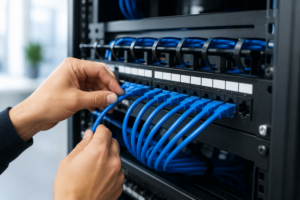
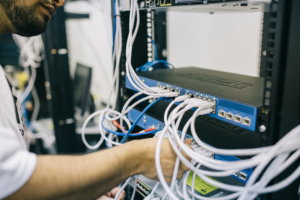
A strong network starts with the right cabling. Whether you’re building a new office setup, upgrading outdated infrastructure, or planning for long-term growth, the type of cabling you choose directly affects speed, reliability, and scalability. Many businesses struggle with one key question: should you go with fiber optic or Ethernet cabling?
Both options are widely used, but they serve different purposes. Understanding how each works—and where each performs best—can help you make a smart, cost-effective decision.
Why This Decision Matters More Than You Think
It’s easy to overlook cabling when planning your network. Most businesses focus on internet plans, hardware, or software—but the cabling is what ties everything together. If the foundation isn’t right, even the best equipment won’t perform at its full potential.
Slow file transfers, dropped video calls, lagging systems, and frequent downtime are often signs of poor cabling choices rather than internet issues. Many businesses only realize this after facing productivity losses or customer complaints.
Choosing the right cabling from the start helps avoid these problems. It ensures your network runs smoothly, supports your daily operations, and can handle future growth without constant upgrades. This isn’t just a technical decision—it’s a business decision that affects efficiency, costs, and overall performance.
What Is Fiber Optic Cabling?
Fiber optic cabling uses light signals to transmit data through thin strands of glass or plastic. Instead of electricity, it relies on pulses of light, which allows data to travel faster and over longer distances without losing quality.
This type of cabling is commonly used in high-performance environments such as data centers, telecommunications infrastructure, and large enterprise networks. It’s designed for speed, efficiency, and future scalability.
What Is Ethernet Cabling?
Ethernet cabling uses copper wires to send data as electrical signals. Common types include Cat5e, Cat6, and Cat6a cables. These cables are widely used in offices, homes, and small business networks to connect computers, routers, switches, and other devices.
Ethernet remains the standard for most local networks because it’s reliable, affordable, and easy to install.
Speed: How Fast Do You Really Need?
Speed is often the first factor businesses consider.
Fiber optic cables can handle extremely high speeds, often exceeding 10 Gbps and scaling much higher depending on the setup. This makes them ideal for businesses that rely on cloud platforms, large file transfers, video conferencing, or heavy data usage.
Ethernet cables also offer strong performance. Modern Ethernet (like Cat6 or Cat6a) can support up to 1–10 Gbps, which is more than enough for many small and mid-sized businesses.
What this means for you:
If your operations involve large amounts of data or require consistently high performance, fiber is the better option. For everyday office tasks, Ethernet usually delivers more than enough speed.
Distance: How Far Does Your Network Need to Reach?
Distance is one of the biggest differences between these two options.
Fiber optic cables can transmit data over several kilometers without signal degradation. This makes them ideal for connecting buildings, campuses, or large facilities.
Ethernet cables are typically limited to about 100 meters per run. Beyond that, you’ll need additional equipment like switches or repeaters to maintain performance.
What this means for you:
If your network spans long distances, fiber is the clear choice. For single-office environments or short cable runs, Ethernet works perfectly.
Reliability: Performance Under Real Conditions
Network reliability isn’t just about speed—it’s about consistency.
Fiber optic cables are immune to electromagnetic interference (EMI). This means they perform well in environments with heavy machinery, electrical systems, or industrial equipment. They also experience less signal loss over distance.
Ethernet cables can be affected by interference, especially in environments with high electrical noise. While shielding helps reduce this issue, it doesn’t eliminate it entirely.
What this means for you:
If your environment includes factories, warehouses, or areas with a lot of electrical activity, fiber offers more stable performance. For standard office settings, Ethernet is usually reliable enough.
Cost: Balancing Budget and Value
Budget plays a major role in any infrastructure decision.
Ethernet cabling is more affordable upfront. The cables themselves are less expensive, and installation is simpler, which reduces labor costs. This makes it a practical choice for small businesses or projects with tight budgets.
Fiber optic cabling requires a higher initial investment. Installation often involves specialized tools and skilled technicians. However, fiber can offer better long-term value due to its durability, performance, and scalability.
What this means for you:
If you need a cost-effective solution right now, Ethernet is the better fit. If you’re planning for long-term growth and want to avoid future upgrades, fiber can be worth the investment.
Security: Protecting Your Data
Data security is becoming increasingly important for businesses of all sizes.
Fiber optic cables are more secure because they don’t emit signals that can be easily intercepted. Tapping into a fiber line is difficult and often noticeable.
Ethernet cables transmit electrical signals, which can be intercepted with the right tools. While this isn’t a common issue for most businesses, it can be a concern in high-security environments.
What this means for you:
If your business handles sensitive data, fiber provides an added layer of protection.
Installation and Maintenance
Ease of installation and ongoing maintenance can influence your decision.
Ethernet cables are easier to install and maintain. Most IT teams are familiar with them, and repairs are straightforward. This reduces downtime and ongoing costs.
Fiber optic cables require more care during installation. They are thinner and can be more fragile if handled improperly. Repairs may also require specialized expertise.
What this means for you:
If you want a simple, quick setup, Ethernet is the easier option. If you’re working with experienced professionals, fiber installation can be handled efficiently.
Scalability: Planning for the Future
Your network should support your business not just today, but years from now.
Fiber optic cabling is highly scalable. It can handle increasing data demands without needing major upgrades. This makes it a strong choice for growing businesses or companies planning digital expansion.
Ethernet can also scale, but it may require upgrades or replacements as your bandwidth needs increase.
What this means for you:
If you expect rapid growth or increasing data usage, fiber gives you more room to expand without reworking your infrastructure.
When Fiber Optic Is the Better Choice
Fiber optic cabling is ideal if:
- You need high-speed, high-bandwidth performance
- Your network covers long distances or multiple buildings
- You operate in environments with high interference
- You want a future-ready infrastructure
- Your business relies heavily on data and cloud services
When Ethernet Makes More Sense
Ethernet cabling is a better fit if:
- You’re setting up a small to mid-sized office
- Your network runs are short
- You need a budget-friendly solution
- You want quick installation and easy maintenance
- Your data usage is moderate
The Hybrid Approach: Getting the Best of Both
Many businesses don’t choose one over the other—they use both.
A common setup includes fiber optic cabling for the main backbone of the network and Ethernet cables for connecting devices within offices or rooms. This approach balances performance and cost while ensuring flexibility.
For example, fiber can connect different floors or buildings, while Ethernet connects individual workstations, printers, and devices.
Making the Right Decision
The best choice depends on your specific needs, not just the technology itself.
Start by asking:
- How much data does your business handle daily?
- How far does your network need to reach?
- What is your budget now versus long-term plans?
- Do you expect growth in users, devices, or applications?
Answering these questions can help you choose a solution that supports both your current operations and future goals.
Build a Network That Works for You
Choosing between fiber optic and Ethernet cabling isn’t about picking the “better” option—it’s about choosing what fits your environment and business strategy.
A well-planned cabling system improves performance, reduces downtime, and supports growth without constant upgrades.
Reliable Telecom provides professional cabling solutions tailored to your business needs. Whether you’re installing a new system or upgrading an existing one, the right guidance ensures your network is built to perform, scale, and last.